
Types of freight and how each one moves
Every shipment starts with one question: what kind of truck does this freight need? The answer depends on how much you are shipping, how heavy and how large it is, and whether it has to stay cold. These are the services a freight broker like Kings arranges every day across the 48 contiguous states.
Full truckload (FTL)
A full truckload shipment fills, or reserves, a whole trailer for one shipper. The truck picks up at your dock and drives straight to the receiver with no stops at terminals and no other freight on board. That makes truckload the fastest and safest way to move larger shipments: less handling means less damage and fewer delays.
The standard truckload trailer in the US is the 53-foot dry van: an enclosed box about 8.5 feet wide that holds 26 standard pallets (48 × 40 inches) on the floor, or more if the freight can be stacked. Federal law limits a loaded tractor-trailer to 80,000 pounds gross on the interstate system, which in practice leaves room for roughly 42,000 to 45,000 pounds of cargo depending on the truck. Shippers usually choose truckload once a shipment reaches about 10 to 12 pallets, or when the freight is fragile, high value or time sensitive.
Typical truckload freight: packaged consumer goods, paper and packaging, beverages, building products, auto parts moving between Ohio, Michigan, Indiana and Kentucky plants, and retail replenishment into distribution centers.
Less-than-truckload (LTL)
LTL is for smaller shipments, usually one to six pallets, that share a trailer with freight from other shippers. LTL carriers run a hub-and-spoke network: a local truck picks up your pallets, brings them to a terminal, and the freight is sorted onto linehaul trailers that run between terminals overnight before a local truck delivers it. You pay only for the space and weight you use.
LTL pricing depends on freight class, a standard scale (from class 50 to class 500) based mostly on density, how easily the freight is damaged and how hard it is to handle. Dense, sturdy freight such as bagged cement sits in a low class; light, bulky freight such as furniture or foam sits in a high class. Accurate weights, dimensions and class on the bill of lading prevent re-weigh and re-class charges later. Extras such as a liftgate, residential delivery or inside delivery are called accessorials and should be requested when you book.
Partial truckload (volume LTL)
Partials sit between LTL and truckload: often 6 to 14 pallets or 8,000 to 25,000 pounds. The load shares a truck with one or two other partial shipments but skips the terminal sorting of LTL, so it is handled less and usually arrives faster. Partials are a good fit when a shipment is too big for LTL to handle well but does not need a whole 53-foot trailer.
Refrigerated (reefer)
Reefer trailers are insulated 53-foot vans with a diesel-powered refrigeration unit that can hold freight frozen, chilled or simply protected from heat and freezing. Food and beverages, fresh produce, meat and dairy, flowers, pharmaceuticals and some chemicals move by reefer. The shipper sets the temperature on the bill of lading, and the unit runs either continuous (always on, for sensitive freight like produce) or cycle-sentry (on and off to save fuel, fine for frozen goods). Because the reefer unit and insulation add weight, a reefer usually carries a little less cargo than a dry van.
Seasonal patterns matter in reefer freight: produce from California, Arizona, Texas, Florida and Georgia drives strong demand for refrigerated trucks in spring and summer, and holiday food shipments tighten capacity in the fall.
Flatbed and step deck
Open-deck trailers carry freight that is too big or awkward to load through the doors of a van, or that must be loaded from the side or top by crane or forklift: steel coils and beams, lumber, pipe, machinery, building materials and equipment. A standard flatbed is 48 or 53 feet long and 8.5 feet wide, and can usually carry around 45,000 to 48,000 pounds. Freight is secured with chains, straps and edge protection, and often covered with tarps to keep weather off.
A step deck (also called a drop deck) has a lower rear deck, about 3.5 feet off the ground instead of 5 feet. That extra height lets taller freight, up to roughly 10 feet, travel under the common 13-foot-6-inch legal height limit without special permits.
Oversize and specialized freight
Loads wider than 8.5 feet, taller than the legal height, longer than the trailer or heavier than the legal weight need oversize or overweight permits from every state on the route. Depending on size, the move may also need escort vehicles, specific travel hours, route surveys and specialized trailers such as removable gooseneck (RGN) or multi-axle lowboys. Construction and farm equipment, transformers, tanks and industrial machinery often move this way, and planning starts days or weeks before pickup.
Expedited and team service
When freight has to arrive faster than a single driver can legally drive, two drivers share one truck and take turns, keeping it moving almost around the clock. Team service is common on long lanes such as Los Angeles to Chicago or Dallas to New Jersey when a production line, a store launch or an export cutoff is waiting.
How trucks and drivers are scheduled
Truck freight runs on rules and on the clock. Understanding them explains why a load picked up in Cincinnati on Monday morning can deliver in Atlanta the same evening, but a load to Los Angeles takes several days.
Hours of service
The Federal Motor Carrier Safety Administration (FMCSA) sets hours-of-service limits for property-carrying drivers:
- 11 hours of driving at most, after 10 consecutive hours off duty.
- A 14-hour window: once the driver starts work, they cannot drive past the 14th hour, even if they took breaks along the way. Waiting at a dock counts against this window.
- A 30-minute break after 8 cumulative hours of driving.
- A weekly limit of 60 hours in 7 days or 70 hours in 8 days, which a 34-hour restart resets.
Since the federal ELD rule, most drivers record these hours on an electronic logging device that connects to the truck's engine. That is why a broker or dispatcher plans around a driver's available hours, and why long waits at shipper and receiver docks have a real cost: every hour at the dock is an hour the truck is not driving.
How far a truck travels in a day
A solo driver typically covers about 500 to 600 miles in a day once traffic, fuel, inspections and breaks are counted. A team can cover roughly twice that. As a rule of thumb:
- Under 250 miles (for example Middletown, Ohio to Indianapolis, Louisville or Columbus): same-day pickup and delivery is often possible.
- 250 to 550 miles (Cincinnati to Chicago, Nashville, Detroit or Atlanta): usually next-day delivery.
- About 1,000 miles (Chicago to Dallas, Columbus to Miami): two days with one driver.
- Coast to coast (Los Angeles to New York, about 2,800 miles): around five days solo, three with a team.
Weather, mountain passes in the Rockies and Appalachians, big-city traffic in places like Atlanta, Houston and the New York area, and appointment times all change the real schedule, so treat these as typical, not guaranteed.
Equipment, safety and compliance
Every carrier needs active operating authority (an MC number) and a USDOT number, insurance that meets federal minimums, and drivers with a commercial driver's license and current medical certificate. Trucks go through regular inspections, and weigh stations and roadside checks happen along major corridors like I-75, I-70, I-40 and I-10. A good broker checks a carrier's authority, insurance and safety record before giving them a load.
Scheduling a shipment, step by step
Here is how a typical truckload or partial shipment moves from your first request to the paperwork at the end.
- Request a quote. Share the pickup and delivery city and state, the ready date, the equipment you need, the weight, the number of pallets or pieces, and anything special such as temperature, hazardous material or appointment requirements. The more accurate the details, the more accurate the rate.
- Book the load. Once you accept the rate, the broker confirms the shipment and tenders it to a vetted carrier with the right equipment on that lane.
- Rate confirmation. The carrier signs a rate confirmation that spells out pickup and delivery details, the agreed rate and the terms, so everyone works from the same document.
- Appointments. Many warehouses and distribution centers require a scheduled appointment for pickup and delivery; others work first come, first served (FCFS) within open hours. Grocery and big-box retail distribution centers are usually strict about appointment times.
- Pickup and the bill of lading. The driver checks in, the freight is loaded, and the shipper and driver sign the bill of lading (BOL), the shipment's contract and receipt. Seals and piece counts are recorded on it.
- In transit. The broker tracks the truck and passes on updates, and works around any delay before it becomes a problem at the receiver.
- Delivery and proof of delivery. The receiver counts the freight, notes any shortage or damage on the paperwork, and signs. The signed proof of delivery (POD) closes the shipment and starts billing.
Common extra charges to know
- Detention: charged when a truck waits too long to be loaded or unloaded. Most carriers allow about two hours of free time before detention starts.
- Layover: when a truck has to wait until the next day to load or unload.
- Lumper fee: paid to a third-party crew that unloads freight at some warehouses, common at grocery distribution centers.
- TONU (truck ordered, not used): when a load is cancelled after the truck is already dispatched.
- Driver assist, liftgate, inside delivery: requested ahead of time when the driver or equipment must help unload.
Telling your broker about these needs when you book is the easiest way to avoid surprises on the invoice.
How shippers and receivers work
Most delays in freight happen at the dock, not on the highway. Shippers who prepare well get better service and better rates, because carriers like loads that load on time.
Live load, drop trailer and drop and hook
In a live load the driver waits at the dock while the trailer is loaded. In a drop trailer program, the carrier leaves an empty trailer at your facility to be loaded on your own schedule, and a driver later hooks the loaded trailer and leaves (drop and hook). High-volume shippers, such as manufacturers and distribution centers around Columbus, Indianapolis and Dallas–Fort Worth, often use drop trailers to keep drivers moving.
Pallets, packaging and labels
- Use sound pallets (the standard US size is 48 × 40 inches) and keep freight within the pallet edges.
- Stretch-wrap and band loads, use corner boards on tall pallets, and mark pallets that cannot be stacked.
- Label every piece with the ship-to and ship-from addresses and the purchase order or reference number.
- Give exact weights and dimensions; a wrong weight can mean an overweight truck or a re-weigh charge.
Loading and securing
Freight should be loaded so the weight is spread evenly along the trailer and does not shift: load locks or straps in vans, chains and straps on flatbeds. Heavy freight is loaded low and toward the front. Shippers usually seal the trailer on full truckloads and write the seal number on the bill of lading.
Receivers and claims
Receivers should count and inspect freight before signing, and write any shortage or damage on the delivery receipt. A clean signature with no notes makes a damage claim much harder. Carriers carry cargo insurance, and freight claims in the US generally follow the Carmack Amendment, which makes the carrier responsible for loss and damage in transit, with limits and exceptions. Photos at pickup and delivery help any claim.
How ports, containers and drayage work
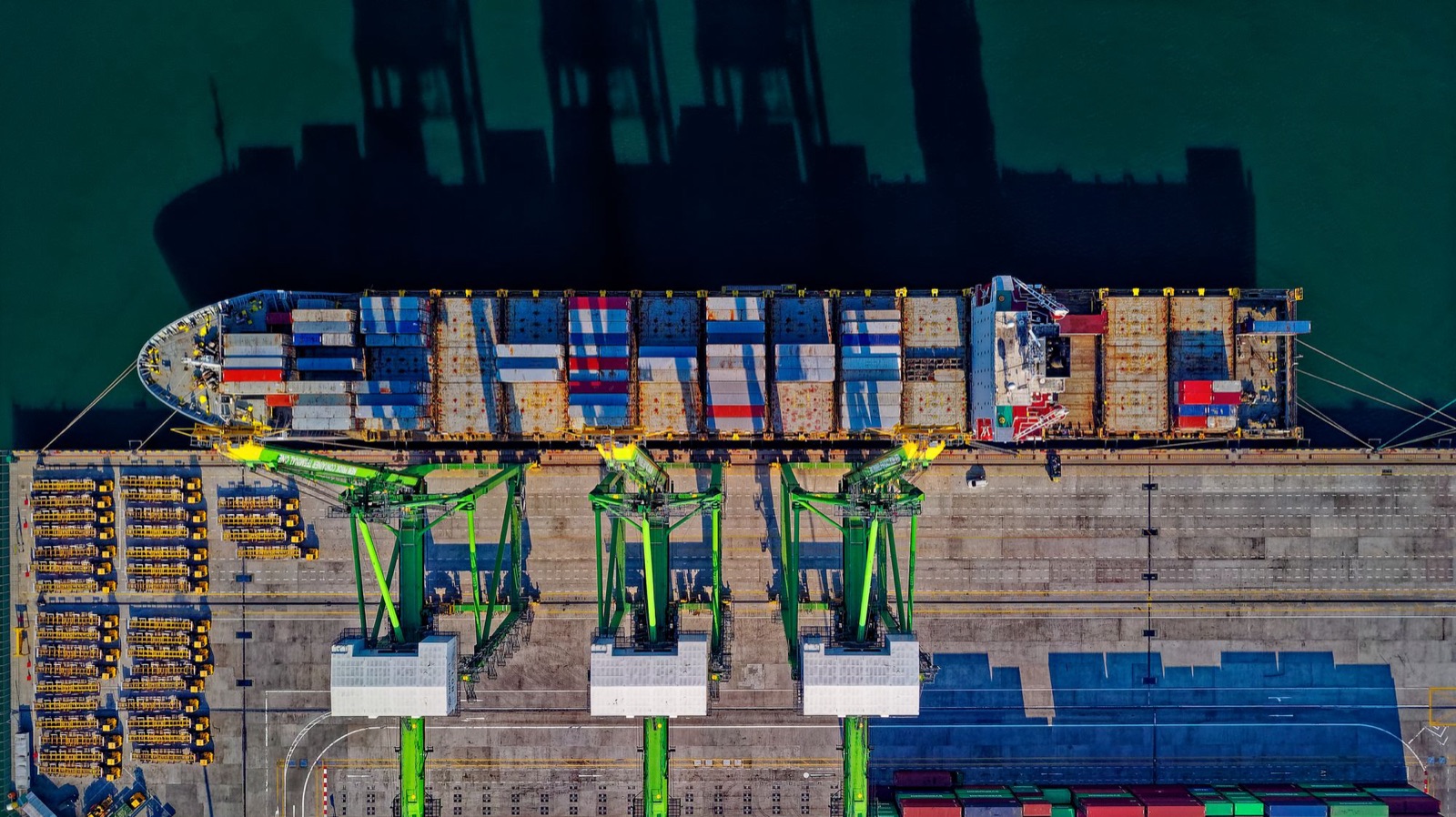
Most goods imported to the United States arrive in ocean containers, and nearly every container finishes its trip on a truck. The short truck move between a port or rail ramp and a nearby warehouse is called drayage.
Containers and chassis
Ocean containers come mainly in 20-foot, 40-foot and 40-foot high-cube sizes, with refrigerated versions for cold cargo. Inside the US, freight is often moved into 53-foot domestic containers or dry vans, which hold more. A container rides on a chassis, a trailer frame that the drayage truck pulls; chassis availability is a real constraint at busy ports.
How a container moves through a port
- The ship is unloaded at a marine terminal and the container is stacked in the yard.
- Customs releases the cargo, usually through a licensed customs broker, and the steamship line releases the container once freight charges are paid.
- A drayage carrier books a terminal appointment, and a driver with a TWIC card (Transportation Worker Identification Credential) picks up the container on a chassis.
- The container is delivered to a warehouse to be unloaded, or to a transload facility where the freight is moved into 53-foot trailers for the long-haul trip inland.
- The empty container is returned to the terminal or a designated depot.
Free time, demurrage and per diem
Terminals and steamship lines allow a few free days. After that, demurrage is charged while a container sits at the terminal, and per diem (container detention) is charged when a container is kept outside the terminal too long. Planning drayage before the vessel arrives is the best way to avoid these charges.
Major US ports
- Los Angeles and Long Beach, California: side by side in San Pedro Bay, together the busiest container port complex in the country, serving the huge warehouse markets of the Inland Empire.
- New York and New Jersey: the largest port on the East Coast, with terminals in Newark and Elizabeth feeding the Northeast.
- Savannah, Georgia: one of the fastest-growing container ports, with major distribution centers along I-16 and I-95 and strong flows to Atlanta.
- Houston, Texas: a leading port for petrochemicals, resin and containers, feeding Texas and the central US.
- Seattle and Tacoma, Washington: operated together as the Northwest Seaport Alliance, a gateway for trade with Asia and for intermodal rail to the Midwest.
- Charleston, South Carolina and Norfolk, Virginia: fast-growing East Coast gateways serving the Southeast, the Carolinas and, by rail, the Ohio Valley.
- Oakland, California: a key port for Northern California exports, including agricultural goods.
Rail ramps and inland ports
Many containers travel inland by rail before their final truck move. Chicago is the largest rail hub in North America, where every major railroad meets. Other important intermodal hubs include Dallas–Fort Worth, Memphis, Kansas City, Atlanta and Columbus, Ohio, where inland terminals connect East Coast ports to the Midwest.
Major US freight hubs and lanes
Freight moves in lanes, a pickup region and a delivery region, and certain metro areas act as hubs where manufacturing, warehousing, highways and rail all meet. Knowing the big hubs explains truck availability and rates on any lane.
The Midwest and Ohio Valley
- Chicago, Illinois: the country's largest rail and trucking crossroads, with I-55, I-80, I-90 and I-94 meeting around it.
- Columbus, Ohio: a major distribution market at the junction of I-70 and I-71, with the Rickenbacker inland port and air cargo airport.
- Cincinnati, Ohio and Northern Kentucky: a manufacturing and air cargo center on I-75 and I-71.
- Dayton, Ohio: on the I-70 and I-75 crossing, close to a large share of the US population within a day's drive.
- Indianapolis, Indiana: "the Crossroads of America", where I-65, I-69, I-70 and I-74 meet.
- Louisville, Kentucky: home to one of the world's largest air cargo hubs and a busy I-65 and I-71 corridor.
- Detroit, Michigan: the center of US auto manufacturing and the busiest US–Canada truck crossing.
- Kansas City, Missouri: a central rail and highway hub on I-70 and I-35.
The South and Southeast
- Atlanta, Georgia: the Southeast's main distribution hub, where I-75, I-85 and I-20 meet.
- Memphis, Tennessee: a river, rail, highway and air cargo hub on I-40 and I-55.
- Nashville, Tennessee and Charlotte, North Carolina: fast-growing distribution markets on I-40, I-65, I-24, I-85 and I-77.
- Dallas–Fort Worth, Texas: one of the largest freight markets in the country, linking I-35, I-20 and I-45 to Mexico, the West and the Southeast.
- Houston and San Antonio, Texas: port, energy and cross-border freight on I-10.
The West
- Los Angeles and the Inland Empire, California: the biggest warehouse market in the US, fed by the ports of Los Angeles and Long Beach.
- Phoenix, Arizona: a growing distribution center on I-10 between California and Texas.
- Denver, Colorado: the Rocky Mountain region's freight hub on I-25 and I-70.
- Salt Lake City, Utah and Reno, Nevada: regional distribution for the Mountain West and Northern California.
Example lanes
- Cincinnati, OH to Atlanta, GA: about 460 miles down I-75, typically next-day.
- Chicago, IL to Dallas, TX: about 950 miles, typically two days with one driver.
- Columbus, OH to Charlotte, NC: about 420 miles, typically next-day.
- Middletown, OH to Chicago, IL: about 280 miles, often same-day or next-morning.
- Los Angeles, CA to Phoenix, AZ: about 370 miles on I-10, typically same-day or next-day.
- Dallas, TX to Atlanta, GA: about 780 miles on I-20, typically one and a half to two days.
Rates and truck availability change with the season and the direction of the lane: a region that ships out more freight than it receives, such as Southern California or the Southeast in produce season, needs more trucks and costs more to ship from.
Middletown, Ohio: our home base
Kings Global Logistics is based in Middletown, Ohio, on the I-75 corridor between Cincinnati and Dayton. From here we arrange freight to and from every one of the 48 contiguous states, with carriers checked for authority, insurance and safety before they load.
Going global: international freight
International shipments still travel by truck at both ends. Imports arrive by ocean or air and then move inland by drayage, rail and truckload; exports move by truck to a port, an airport or a border crossing.
Cross-border trucking with Canada and Mexico
Trade under the USMCA moves largely by truck. Laredo, Texas is the busiest land port on the US–Mexico border, with other major crossings at El Paso, Otay Mesa near San Diego and Nogales, Arizona. On the northern border, the Detroit–Windsor crossing is the busiest truck route to Canada, followed by Buffalo–Niagara and Port Huron. Cross-border loads need customs paperwork prepared by licensed customs brokers on each side, and often transfer between carriers at the border.
Ocean and air freight
Ocean shipping is priced by the container (FCL, a full container load) or by volume (LCL, less than container load) and takes weeks; air freight takes days and costs more. Both rely on trucking to reach the final customer.
Where Kings is heading
Today Kings Global Logistics arranges freight across the 48 contiguous states. International lanes are next on our road map. If you plan cross-border or overseas shipments, tell us about them and you will hear first when we open them.
Freight shipping questions
What is the difference between truckload and LTL?
Truckload reserves a whole trailer for one shipper and drives straight to the receiver. LTL combines smaller shipments from several shippers and moves them through terminals, so you pay only for the space you use but the freight is handled more and usually takes longer.
How many pallets fit on a 53-foot trailer?
A 53-foot dry van holds 26 standard 48 × 40 inch pallets on the floor, or more if the freight can be safely stacked. Weight usually becomes the limit before space does for heavy freight.
How far can a truck driver drive in a day?
Federal hours-of-service rules allow up to 11 hours of driving within a 14-hour work window, so a solo driver typically covers about 500 to 600 miles a day. A team of two drivers can cover roughly twice that.
What is drayage?
Drayage is the short truck move of an ocean container between a port or rail ramp and a nearby warehouse or transload facility.
What is detention in trucking?
Detention is a charge for keeping a truck waiting too long at a pickup or delivery. Most carriers allow about two hours of free time before it starts.
Does Kings Global Logistics ship internationally?
Not yet. Today we arrange freight across all 48 contiguous states. International lanes are next, and you can ask us to let you know when they open.
Ready to ship? Request a quote. Run your own trucks? Haul with Kings.